

On World Spine Day, Mountain Spine & Orthopedics Reminds Adults That Scoliosis Is Not Only a Childhood Condition
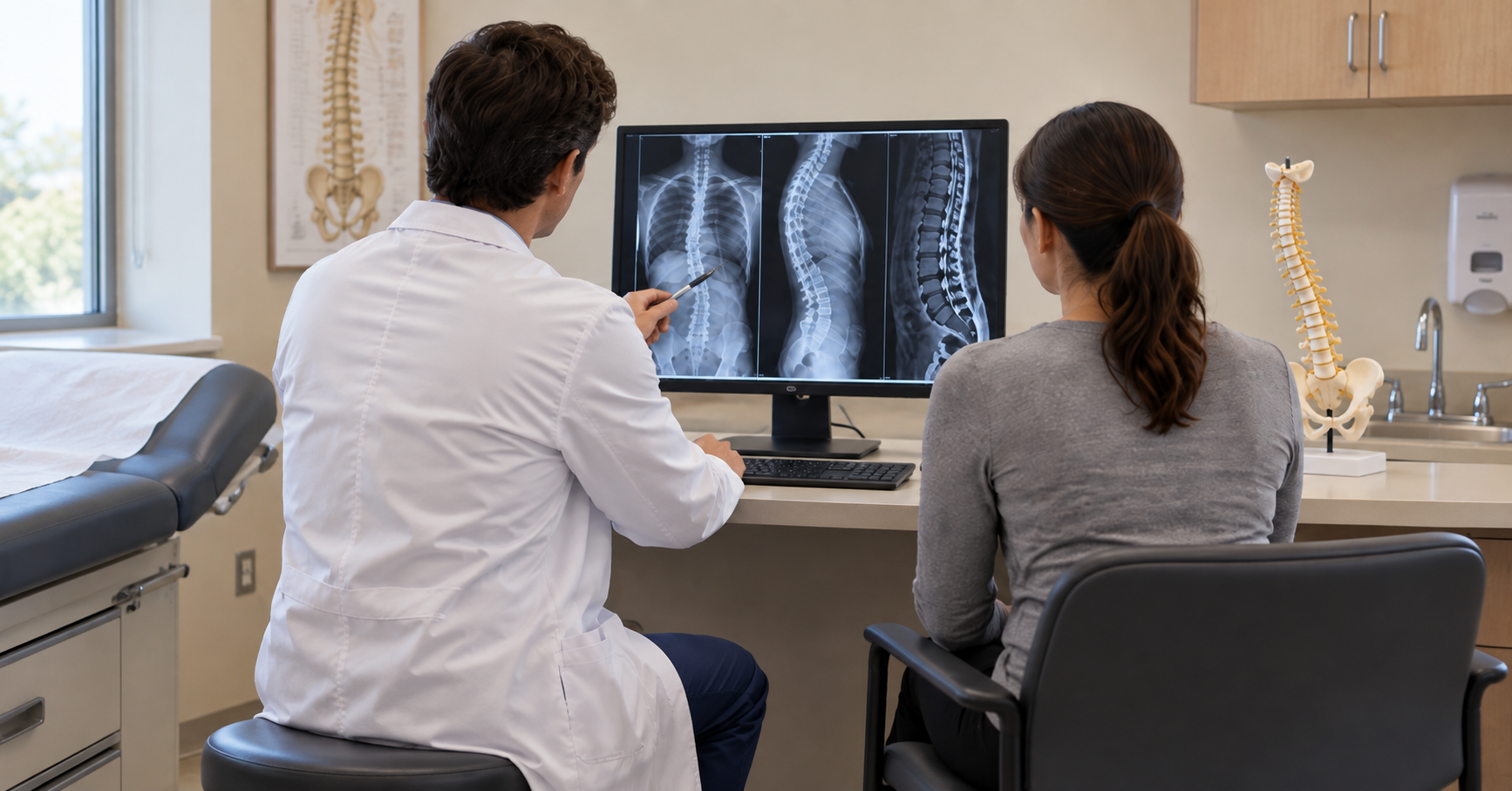
A spine specialist reviews a standing scoliosis X-ray with an adult patient during an orthopedic evaluation.

In adults, a spinal curve can cause back pain, or numbness and shooting pain down the legs.

A doctor reviews scoliosis imaging with a patient during a realistic in-office consultation.
A spinal curve is common after 60, and a curve on an X-ray does not automatically mean surgery.
HOLLYWOOD, FL, UNITED STATES, October 16, 2026 /EINPresswire.com/ -- On World Spine Day, Mountain Spine & Orthopedics is encouraging adults with back pain, leg pain or a known spinal curve to have it properly evaluated rather than putting it down to age.Scoliosis is usually thought of as a teenage condition, but it is common in older adults. A 2020 review of studies that X-rayed adults with no previous scoliosis diagnosis estimated that about a third of people over 60 have scoliosis, a sideways curve of the spine, although estimates vary widely. The form considered most common in adults, degenerative scoliosis, is linked to uneven wear of the discs and small joints of the lower spine and usually appears after age 50.
Adult degenerative scoliosis can cause back pain, and narrowing around the spinal nerves can bring numbness or shooting pain down the legs. At the same time, a curve seen on an X-ray is not always the source of a person's pain, and the size of a curve does not reliably predict how much it hurts. That is why an evaluation looks at how the curve relates to a patient's symptoms, nerves and balance, not at the curve angle alone.
An evaluation typically uses standing X-rays of the whole spine to measure the curve, with an MRI or CT scan added when there is leg pain or other nerve symptoms. Most adults with degenerative scoliosis who do not have disabling symptoms can be managed without surgery. Surgery is generally reserved for adults whose back or leg pain stays disabling despite reasonable non-surgical care.
"A lot of adults hear the word scoliosis and assume surgery is the next step. For most of them, it isn't," Mountain Spine & Orthopedics said in a statement. "The curve on the X-ray is only part of the picture. What matters is how it relates to a person's pain, nerves and balance. If back or leg pain isn't getting better, it's worth having it checked instead of putting it down to age."
People should see a doctor if back pain does not improve after a few weeks, or if it comes with numbness or tingling, fever, trouble urinating or unintended weight loss, or follows a fall or injury. Leg weakness or loss of bladder or bowel control needs medical attention right away.
The practice has written a plain-language guide to when adult scoliosis needs surgery, available on its website.
Adults can request an evaluation through the practice's website. No physician referral is required. The practice accepts PPO private insurance plans.
ABOUT MOUNTAIN SPINE & ORTHOPEDICS
Mountain Spine & Orthopedics is an orthopedic and spine practice with offices in Florida, New Jersey and New York. It offers non-surgical spine care and pain management, spinal injections, spine and neck surgery including surgery for adult scoliosis, and arthroscopic knee and shoulder surgery. More at mountainspineorthopedics.com.
SOURCES
1. McAviney J, et al. The prevalence of adult de novo scoliosis: a systematic review and meta-analysis. Eur Spine J. 2020;29(12):2960-2969.
2. Scoliosis Research Society, Adult Scoliosis patient information; Cho KJ, et al. Surgical treatment of adult degenerative scoliosis. Asian Spine J. 2014;8(3):371-381.
3. Schwab F, et al. Adult scoliosis: prevalence, SF-36, and nutritional parameters in an elderly volunteer population. Spine. 2005;30(9):1082-1085.
4. Diebo BG, et al. Adult spinal deformity. Lancet. 2019;394(10193):160-172.
5. National Institute of Arthritis and Musculoskeletal and Skin Diseases, Back Pain (reviewed February 2023); American Academy of Orthopaedic Surgeons, OrthoInfo: Low Back Pain.
Dominic Adams
Mountain Spine & Orthopedics
+1 561-223-9959
Visit us on social media:
Instagram
Facebook
YouTube
TikTok
X
Legal Disclaimer:
EIN Presswire provides this news content "as is" without warranty of any kind. We do not accept any responsibility or liability for the accuracy, content, images, videos, licenses, completeness, legality, or reliability of the information contained in this article. If you have any complaints or copyright issues related to this article, kindly contact the author above.
